


Its position in the Alpine basin and the subsoil composition (granites, porphyries and permeable moraine deposits) favor the ascent of radon gas, making measurements in buildings essential.
Radon Gas Monitoring and Prevention in Trentino Alto Adige
Radon Trentino Alto Adige: Priority Areas Map, Measurement Obligations and Remediation
Guide to Legislative Decree 101/2020 in the Region. While the national regulations apply everywhere, only the Autonomous Province of Bolzano has officially classified the priority areas (Resolution 2024), imposing specific obligations. In Trentino, updates on zoning are expected, but the obligation to assess the risk remains valid.
The Radon Issue in Trentino Alto Adige
A geologically complex Alpine territory.
Trentino Alto Adige Regulatory References
The Autonomous Province of Bolzano has transposed the national regulations through the Provincial Executive Resolution no. 110 of February 20, 2024 (and subsequent updates). This fundamental act identifies the radon priority areas in the provincial territory, based on measurement campaigns carried out by the Provincial Agency for the Environment and Climate Protection.

Province of Bolzano: Priority Areas Defined
The Autonomous Province of Bolzano has completed a pioneering process in Italy for territorial classification. With the official definition of priority areas (February 2024), the measurement obligation is triggered for workplaces located on the ground floor and basement in numerous municipalities in South Tyrol. The zoning is based on a precise statistical threshold: priority areas are those where it is estimated that more than 15% of buildings exceed the annual average concentration of 300 Bq/m³. This rigorous approach, which goes beyond a simple arithmetic mean, aims to protect public health in zones where the risk of elevated exposure is statistically significant.
Alpine Geology: The Link with Granites and Porphyries
The high incidence of radon in South Tyrol is not coincidental but is written in the very rocks of the Alps. The territory is characterized by a widespread presence of igneous and metamorphic rock formations, particularly granites and porphyries (such as in the Atesine volcanic complex). These rocks are naturally rich in uranium, the radioactive "parent" from which radon decays. Soil permeability then plays a crucial role: fractures in crystalline rocks and the porosity of moraine deposits in the valleys allow the gas to rise quickly to the surface ("chimney effect") and infiltrate buildings through foundations, accumulating in enclosed spaces.
Provincial Monitoring: 20 Years of Data
Today's classification is the result of decades of work. The Provincial Agency for the Environment and Climate Protection of Bolzano (APPA Bolzano) has conducted constant monitoring for over twenty years. The data collected over this long period, through thousands of dosimeters distributed in homes and schools, has allowed building an extremely solid and detailed risk map. These are not theoretical estimates but experimental evidence that has guided the Administration in the precise identification of areas where mandatory measurements and remediation are most urgent.
Historical Path of Radon Regulations in Trentino Alto Adige
From the 2013 European Directive to the Bolzano Provincial Resolution 2024: the regulatory path of radon gas in the region.
Directive 2013/59/Euratom
The BSS Directive (Basic Safety Standards) establishes fundamental safety standards for protection against ionizing radiation, including radon gas. It introduces for the first time at the European level the reference level of 300 Bq/m³ for workplaces and dwellings.
Read on EUR-LexLegislative Decree July 31, 2020, n. 101
The Consolidated Law on Radiation Protection transposes the Euratom Directive in Italy. It introduces mandatory obligations for employers, defines Priority Areas, establishes the National Radon Action Plan (PNAR) and provides for criminal penalties for defaulters (Art. 205).
APPA Bolzano Monitoring Campaigns
The Provincial Environmental Agency (APPA Bolzano) has conducted systematic measurements in homes and public buildings for over twenty years. This historical database provided the scientific evidence needed to precisely map risk areas, anticipating the national legal obligation.
South Tyrol Radon PortalNational Radon Action Plan
The strategic document (PNAR 2023-2032) that coordinates the Regions. Fundamental for long-term remediation strategies and prevention in new constructions.
Executive Resolution n. 110 of 02/20/2024
With this resolution, the Autonomous Province of Bolzano has made official the list of Municipalities in Priority Area. The measurement obligation is triggered for workplaces located on the ground floor, semi-basement and basement in these municipalities. The zoning is based on solid statistical data indicating a >15% probability of exceeding legal limits.
Visit the South Tyrol Radon PortalMunicipalities in Priority Area (Province of Bolzano)
Classification of the provincial territory according to recent surveys.
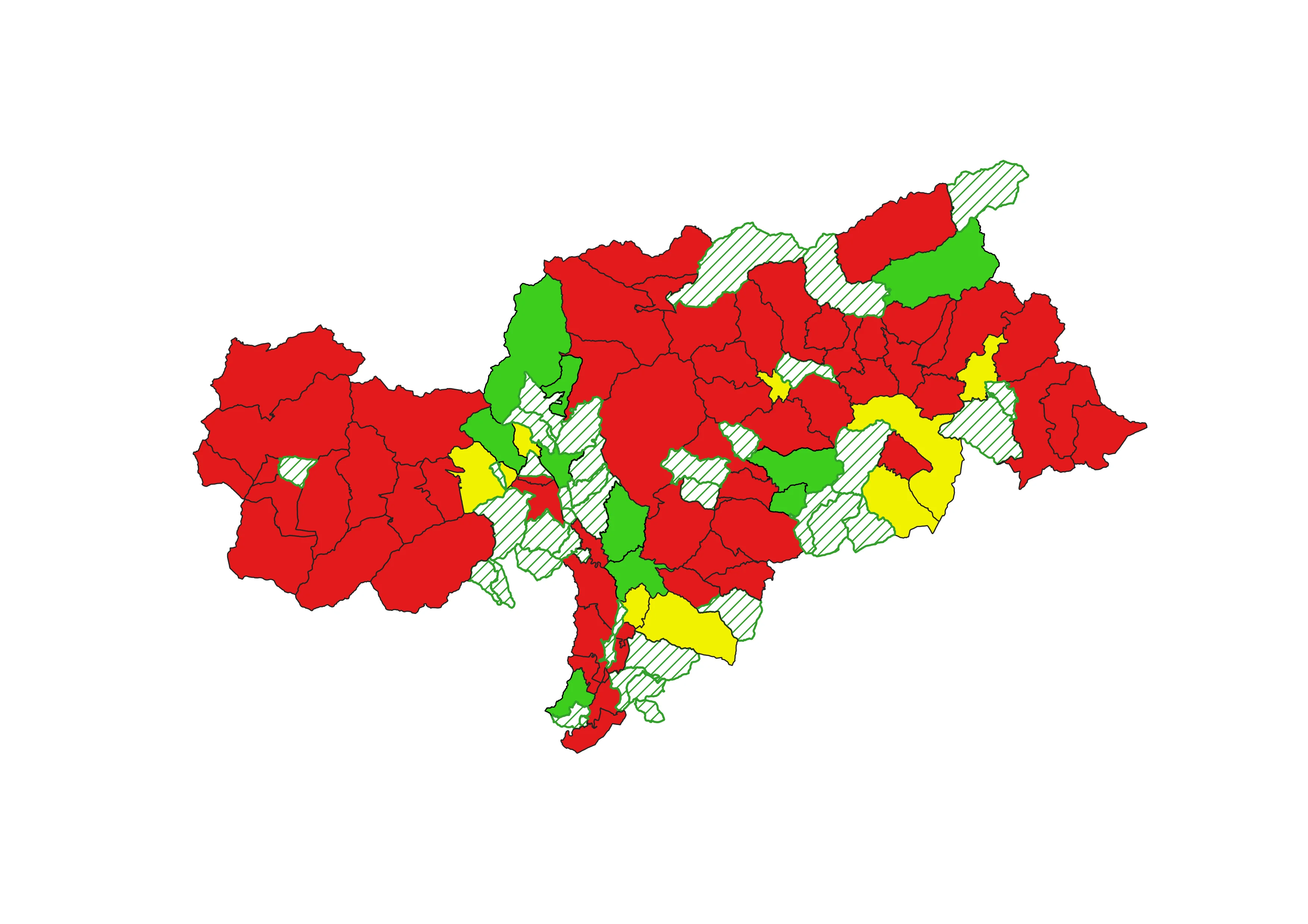
CLASSIFICATION
Radonrisikogebiet
High-risk municipalities.
Radonvorsorgegebiet
Medium-risk municipalities.
Zu vertiefende
Investigations in progress.
Andere Gemeinden
Low risk.
Source: Provincial Environmental Agency of Bolzano.
Below are the lists of municipalities in the Province of Bolzano classified as Priority Areas and Attention Areas. For the Province of Trento, please refer to the specific updates from APPA Trento.
Municipalities in Priority Area (Bolzano)
| Municipality | Prov | Inhabitants |
|---|---|---|
| Appiano sulla Strada del Vino | BZ | 14.963 |
| Brennero | BZ | 2328 |
| Bressanone | BZ | 23.108 |
| Bronzolo | BZ | 2791 |
| Brunico | BZ | 17.157 |
| Caldaro sulla Strada del Vino | BZ | 8280 |
| Campo di Trens | BZ | 2674 |
| Chiusa | BZ | 5240 |
| Dobbiaco | BZ | 3451 |
| Egna | BZ | 5489 |
| Fortezza | BZ | 1032 |
| La Valle | BZ | 1411 |
| Laces | BZ | 5289 |
| Laion | BZ | 2800 |
| Lana | BZ | 12.680 |
| Lasa | BZ | 4167 |
| Luson | BZ | 1580 |
| Malles Venosta | BZ | 5347 |
| Martello | BZ | 884 |
| Ora | BZ | 3866 |
| Perca | BZ | 1702 |
| Ponte Gardena | BZ | 192 |
| Prato allo Stelvio | BZ | 3703 |
| Racines | BZ | 4593 |
| Rasun Anterselva | BZ | 2976 |
| Renon | BZ | 8094 |
| San Candido | BZ | 3372 |
| San Leonardo in Passiria | BZ | 3642 |
| Termeno sulla Strada del Vino | BZ | 3452 |
| Tires | BZ | 1027 |
| Tubre | BZ | 950 |
| Ultimo | BZ | 2860 |
| Valdaora | BZ | 3166 |
| Valle Aurina | BZ | 6029 |
| Valle di Casies | BZ | 2317 |
| Vandoies | BZ | 3353 |
| Varna | BZ | 4993 |
| Vipiteno | BZ | 7100 |
| Municipality | Prov | Inh. | Municipality | Prov | Inh. |
|---|---|---|---|---|---|
| Appiano sulla Strada del Vino | BZ | 14.963 | Ora | BZ | 3866 |
| Brennero | BZ | 2328 | Perca | BZ | 1702 |
| Bressanone | BZ | 23.108 | Ponte Gardena | BZ | 192 |
| Bronzolo | BZ | 2791 | Prato allo Stelvio | BZ | 3703 |
| Brunico | BZ | 17.157 | Racines | BZ | 4593 |
| Caldaro sulla Strada del Vino | BZ | 8280 | Rasun Anterselva | BZ | 2976 |
| Campo di Trens | BZ | 2674 | Renon | BZ | 8094 |
| Chiusa | BZ | 5240 | San Candido | BZ | 3372 |
| Dobbiaco | BZ | 3451 | San Leonardo in Passiria | BZ | 3642 |
| Egna | BZ | 5489 | Termeno sulla Strada del Vino | BZ | 3452 |
| Fortezza | BZ | 1032 | Tires | BZ | 1027 |
| La Valle | BZ | 1411 | Tubre | BZ | 950 |
| Laces | BZ | 5289 | Ultimo | BZ | 2860 |
| Laion | BZ | 2800 | Valdaora | BZ | 3166 |
| Lana | BZ | 12.680 | Valle Aurina | BZ | 6029 |
| Lasa | BZ | 4167 | Valle di Casies | BZ | 2317 |
| Luson | BZ | 1580 | Vandoies | BZ | 3353 |
| Malles Venosta | BZ | 5347 | Varna | BZ | 4993 |
| Martello | BZ | 884 | Vipiteno | BZ | 7100 |
| Municipality | Prov | Inh. | Municipality | Prov | Inh. | Municipality | Prov | Inh. |
|---|---|---|---|---|---|---|---|---|
| Appiano sulla Strada del Vino | BZ | 14.963 | Laion | BZ | 2800 | San Candido | BZ | 3372 |
| Brennero | BZ | 2328 | Lana | BZ | 12.680 | San Leonardo in Passiria | BZ | 3642 |
| Bressanone | BZ | 23.108 | Lasa | BZ | 4167 | Termeno sulla Strada del Vino | BZ | 3452 |
| Bronzolo | BZ | 2791 | Luson | BZ | 1580 | Tires | BZ | 1027 |
| Brunico | BZ | 17.157 | Malles Venosta | BZ | 5347 | Tubre | BZ | 950 |
| Caldaro sulla Strada del Vino | BZ | 8280 | Martello | BZ | 884 | Ultimo | BZ | 2860 |
| Campo di Trens | BZ | 2674 | Ora | BZ | 3866 | Valdaora | BZ | 3166 |
| Chiusa | BZ | 5240 | Perca | BZ | 1702 | Valle Aurina | BZ | 6029 |
| Dobbiaco | BZ | 3451 | Ponte Gardena | BZ | 192 | Valle di Casies | BZ | 2317 |
| Egna | BZ | 5489 | Prato allo Stelvio | BZ | 3703 | Vandoies | BZ | 3353 |
| Fortezza | BZ | 1032 | Racines | BZ | 4593 | Varna | BZ | 4993 |
| La Valle | BZ | 1411 | Rasun Anterselva | BZ | 2976 | Vipiteno | BZ | 7100 |
| Laces | BZ | 5289 | Renon | BZ | 8094 |
Municipalities in Attention Area
| Municipality | Prov | Inh. |
|---|---|---|
| Badia | BZ | 3575 |
| Lagundo | BZ | 5148 |
| Laives | BZ | 18.658 |
| Marebbe | BZ | 3187 |
| Municipality | Prov | Inh. | Municipality | Prov | Inh. |
|---|---|---|---|---|---|
| Badia | BZ | 3575 | Laives | BZ | 18.658 |
| Lagundo | BZ | 5148 | Marebbe | BZ | 3187 |
| Municipality | Prov | Inh. | Municipality | Prov | Inh. | Municipality | Prov | Inh. |
|---|---|---|---|---|---|---|---|---|
| Badia | BZ | 3575 | Laives | BZ | 18.658 | |||
| Lagundo | BZ | 5148 | Marebbe | BZ | 3187 |
The Cause: Geology of the South Tyrolean Territory
The link between rocks, permeable soil and radon gas concentrations in South Tyrol and Trentino.
Granites and Porphyries
Large areas of South Tyrol are composed of igneous rocks (granites, porphyries) that naturally contain higher uranium concentrations than sedimentary rocks.
Soil Fracturing
Faults and fractures in the rocks allow radon gas to easily rise to the surface, penetrating buildings through foundations.
Permeability
The permeability of gravelly valley floor terrain favors convective gas transport, increasing the risk even in flat areas.
Building Materials
Historically, local use of granitic or tuff stones for construction can contribute to indoor radon concentrations.
Mitigation
In new constructions, waterproofing and ventilated crawl space ventilation are vital. In existing buildings, sub-slab or crawl space depressurization is the most effective and proven radon remediation technique.
Certified Measurements
To comply with legal obligations, measurements must be performed with certified dosimeters by qualified dosimetry organizations, according to the UNI ISO 11665 standard.
Business Obligations and Radon DVR in Trentino Alto Adige
How to integrate radon risk assessment into workplace safety for South Tyrolean and Trentino businesses.
Mandatory Assessment
The employer has the mandatory legal obligation to assess radon risk under Legislative Decree 101/2020. This assessment is not a mere formality but must be integrated into the Risk Assessment Document (DVR), with a certain date. The absence of instrumental measurements renders the DVR incomplete, exposing the company to sanctions and civil/criminal liability in cases of occupational diseases.
300 Bq/m³ Limit and Remediation
The regulations set the maximum tolerated annual average concentration at 300 Bq/m³. If measurements exceed this value, the employer must engage a Radon Remediation Expert (qualified surveyor, engineer or architect) to design and implement corrective measures within 24 months, then repeat measurements to verify effectiveness.
Criminal Penalties
Non-compliance is severely punished under Art. 205 of Legislative Decree 101/2020. Penalties include imprisonment from 1 to 6 months or a fine from €2,000 to €15,000 for employers who fail to carry out the assessment or do not meet remediation deadlines. The penalty applies for each non-compliant property unit.
FAQ
FAQ: Frequently Asked Questions about Radon in Trentino Alto Adige
The most searched answers about radon gas, measurement obligations and priority areas in the Province of Bolzano and Trento.
What is the difference between Bolzano and Trento?
As a private citizen, do I need to measure radon at home?
Which premises must I measure in my business?
Can I use "DIY" dosimeters?
How long does measurement take and how much does it cost?
What happens if I exceed 300 Bq/m³?
Are schools subject to monitoring?
Who monitors compliance?
Where can I find a list of certified laboratories?
Are there incentives for remediation?
Is your business in a radon risk municipality in Trentino Alto Adige?
Don't risk criminal penalties. Book your certified measurement today with accredited dosimeters and a qualified laboratory. Check if your municipality is in a priority area.